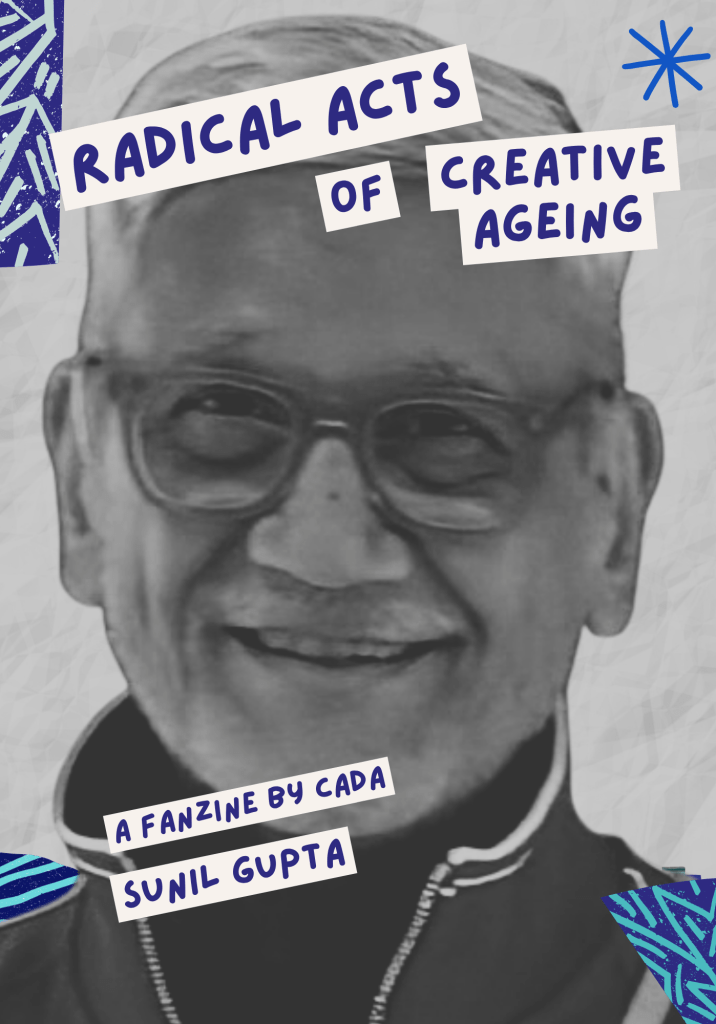
For Sunil Gupta, ageing is not a retreat from the world. It is a different way of engaging with it.
A photographer, curator, writer and activist, Sunil has spent more than five decades making work around race, migration, queer identity, family and belonging. Born in India and raised partly in Canada before settling in London, he was one of the founders of the Association of Black Photographers, now Autograph, in 1988. His work has been exhibited internationally and is held in collections including Tate and the Museum of Modern Art in New York.
His creativity and activism have been inseparable. His photography emerged alongside gay activism in Montreal, documenting protests and political activity. His camera became a way of making visible lives and experiences that were largely absent from mainstream cultural history. He describes his practice as “cultural activism”: teaching, publishing, making work and speaking publicly to challenge invisibility.
One of his most provocative observations is that his work was never primarily interested in shocking people. The radical act was speaking openly.
Reflecting on his early work in India, Sunil recalls the title of a 1980 article: They Dare Not Speak Its Name in Delhi. “It’s the speaking about it that’s the problem,” he says. For him, photography became a way of making queer lives discussable – and therefore visible.
This commitment to speaking, questioning and connecting continues into his seventies. Sunil rejects the idea that ageing should mean stepping away from public life. He still teaches, makes work, exhibits and engages with younger generations. But his role has changed. Rather than leading from the front, he is increasingly comfortable supporting younger people to lead themselves: “I can’t be the person on the street for you. You got to do that.”
His message is also about resisting isolation. He advocates creating spaces where generations can meet, talk and make things happen together. “Even having a dinner party is a creative gesture,” he suggests.
Perhaps the most challenging moment in the conversation comes when Sunil reflects on ageism. He describes encountering expectations that, because he is older, he should be physically diminished: “Why am I not more feeble?” he recalls wondering.
His statement, opens a bigger question: how much do we internalise society’s expectations of what ageing should look like?
Sunil’s own answer is to keep going. “I’m never going to retire from it,” he says. His days remain unpredictable. “Every day is different. You never know what’s coming.”

