Reflections on the Creative Ageing Symposium in Lancaster By Arti Prashar Co-Chair of CADA Creative Ageing; Development & Agency
Lancaster welcomed us with sunshine – bright, warm, and full of promise. The short walk from my hotel to the Dukes Theatre felt good, made even better when I spotted a familiar face outside the venue. Everyone was very welcoming.
The symposium was packed with presentations, workshops, and performances that together formed a rich tapestry of creative ageing. One key take away that echoed through many of the sessions was the importance of play and how we should embrace play in all that we do. We need to balance play, creativity, and connection in our lives. Laughter, socialising, and movement.
The second take away was to age well, we must embrace balance – literally and figuratively. Stand on one leg while brushing your teeth, we were told. It helps maintain physical balance, which becomes vital as we grow older.
It was noticeable that during the morning sessions I appeared to be the sole person from the global majority. You’d think I was used to it by now but I’m not – after 40yrs plus in this sector it makes me sigh, it grates with me. It gave me reason to ponder over my presentation.
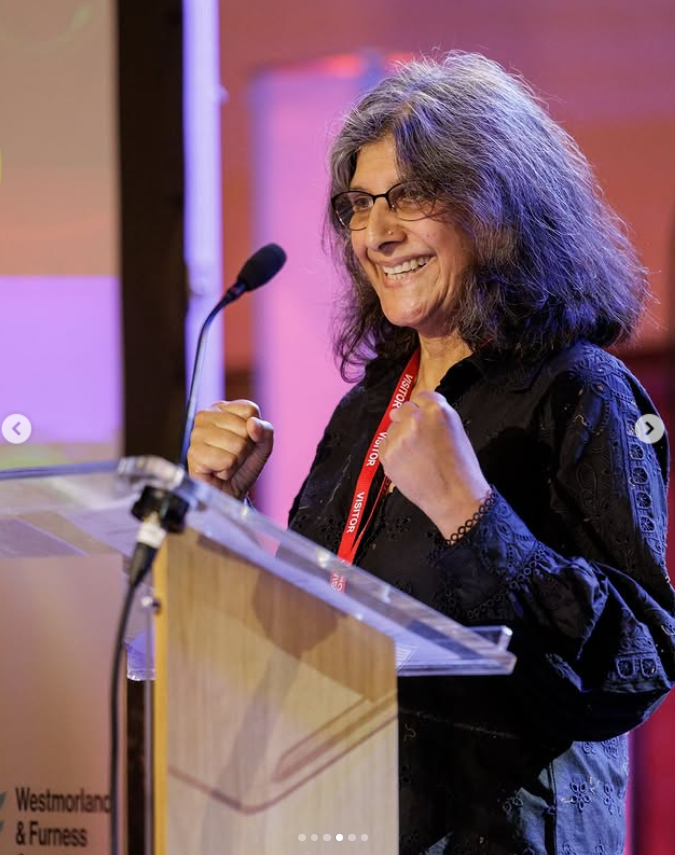
My keynote ‘Late Style’ was just after lunch. I would be raising questions about inclusion. I wondered if I had the right tone for my presentation or would it be too serious? But when it came time to speak, I surprised myself. The moment the hands free mic was on, I slipped naturally into performance and facilitator mode. I guess some things never leave you!
Stepping off stage, I wasn’t sure how my speech had landed. But then people began to approach me, saying they felt inspired. That my words were refreshing and important. I had a clear message: Fund artists – especially diverse, intersectional artists. Recognise and credit all artists in your projects. Without artists, these initiatives would not shine as they do.
CADA (Creative Ageing; Development Agency) is a vital organisation. Its work and advocacy are clearly needed.
Across the two days, several themes stood out:
· Play as a practice for wellbeing: Emma Rucastle’s workshop on adult play reminded us that creativity and joy aren’t luxuries – they’re necessities.
· Performances weren’t an afterthought: Creative Ageing was woven into the symposium, an integral part of why we were gathered with wonderful poetry, film and theatre performances.
· Venues matter: The success of creative ageing projects in cultural spaces depends on leadership. Chris Lawson, CEO of the Dukes Theatre, showed what it means to put creative ageing at the heart of a venue’s mission.
· Where’s the diversity? Intersectionality was a recurring concern. How do we ensure participation from people with learning disabilities, the global majority, LGBTQ+ communities, and older men?
· The NHS and Age UK are listening: Both organisations in Lancashire are actively seeking partnerships with artists for health and wellbeing. The focus is shifting from simply living longer to living well as we age.
· Older artists want recognition: Not just participation. Not just soft skills. But visibility, opportunity, and validation as professionals.
· Dementia arts go beyond memory: It’s not only about recalling the past, but about experiencing the moment – here and now.
A standout moment for me was Dr Katharine Low’s presentation. She shared a deeply moving intergenerational women’s health project that used creative workshops to open up difficult conversations. The women made bread, drew one another, planted flowers. The process was tender, layered, and rooted in love. One powerful phrase still echoes in my mind: “the secrets my mother never told me.”
David Cutler, Director of the Baring Foundation, gave a thoughtful overview of where the creative ageing sector stands in the UK. He reminded us that this is not a new field – it has decades of history. He spoke of older artists like Hokusai, still learning at 70, and still producing great art in his later life.
The Baring Foundation funds work on the principle that creativity is a human right. And as David Cutler said “ … the UK demographics are changing be properly inclusive – make sure everyone is welcomed”.
He continued by saying there’s been no UK government policy on creative ageing in over 20 years. Are we losing ground, holding steady, or moving forward? David didn’t have a firm answer. But he did point out that arts organisations are often leading the way with how to engage with older people, while older people’s services aren’t always sure how to engage with the arts in return.
So, what do we need next? We need to keep pushing for a sector that is inclusive of everybody, embraces every form of art, and is embedded everywhere. And that includes live performance, digital work, film, dance, music, and visual arts made by older people – not just for them.
The symposium brought this vision to life. It was rich with provocation, fun, laughter, and deep reflection. I reconnected with old friends and made new ones. For me, it was an uplifting two days – one that reaffirmed the value of creative ageing and CADA’s vital role in shaping its future.
 Creative Ageing: Development & Agency